Freediving Safety • Beginner Guide
Is Freediving Safe? What Beginners Need to Know
The honest answer, from certified instructors — plus the simple rules that make freediving a safe, controlled activity.
Short answer
Yes — freediving is safe when you follow the rules. Always dive with a trained buddy (never alone), never hyperventilate, equalize gently, stay well within your limits, and learn from certified instructors. The two main risks — blackout and ear/sinus barotrauma — are largely preventable with proper training and the buddy system. Beginner courses start in shallow, controlled water.
THE RULES THAT KEEP FREEDIVING SAFE
1. Never dive alone
Always dive with a trained buddy who watches you on every dive and for ~30 seconds after you surface. "One up, one down" is the most important rule in freediving.
2. Never hyperventilate
Fast, forceful breathing lowers your CO2 and can dangerously delay the urge to breathe. Stay relaxed and breathe normally, with one calm final breath.
3. Equalize early and gently
Never force equalization. Equalize often and gently on the way down, and stop and ascend if your ears won't equalize — this prevents barotrauma.
4. Stay within your limits
Progress gradually. Most incidents come from pushing depth or breath-hold too fast. Conservative, consistent training is how you improve safely.
UNDERSTANDING THE REAL RISKS
Blackout
A loss of consciousness from low oxygen, usually caused by pushing breath-hold too far or hyperventilating. It's why we never dive alone: a watchful buddy can bring a diver to the surface immediately. With conservative limits and the buddy system, the risk is very low.
Barotrauma (ears & sinuses)
Pressure-related discomfort or injury, usually from forcing equalization or diving with a cold/congestion. Prevented by equalizing early and gently, and by not diving when congested. If your ears won't equalize, you stop and ascend.
HOW WE KEEP BEGINNERS SAFE
Start shallow & controlled
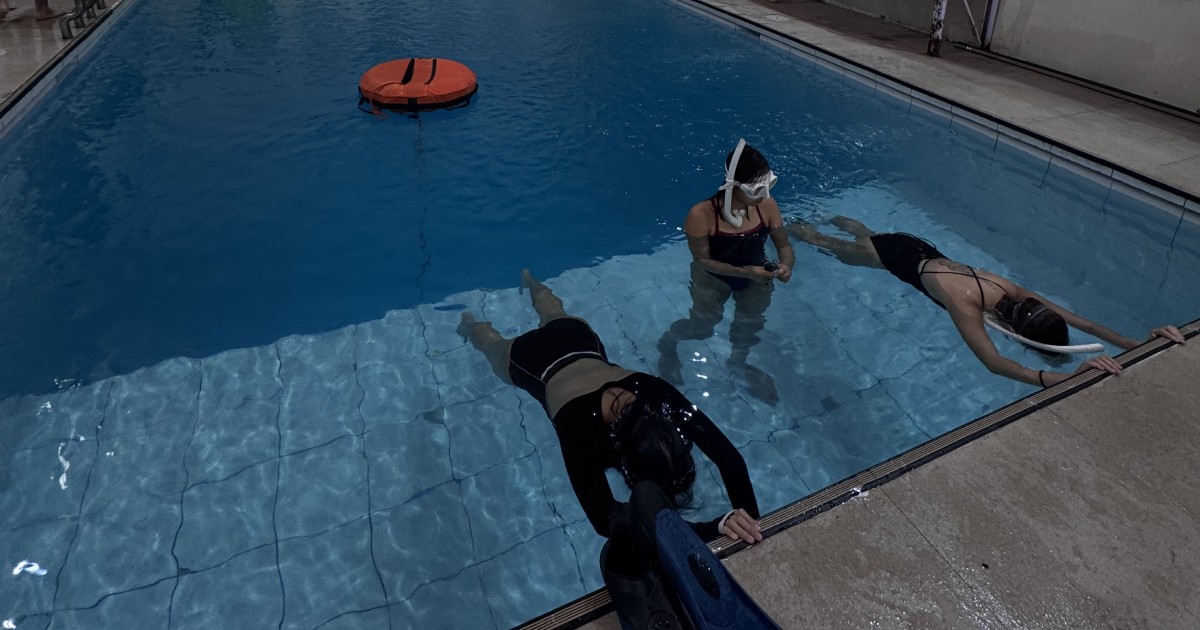
First sessions are in a pool or calm, shallow open water — never thrown into the deep end.
Small groups, direct supervision
Small groups mean a certified instructor is always close, watching and coaching.
Buddy system from day one
We teach safety and buddying as core skills — not an afterthought — so good habits start early.
Non-swimmers and nervous beginners are welcome — basic water comfort skills are introduced gently in the first session.
FREQUENTLY ASKED QUESTIONS
Is freediving safe for beginners?
Yes — when you train properly. Beginner courses start in shallow, controlled water under the direct supervision of a certified instructor, in small groups. You learn safety, relaxation, equalization, and the buddy system before going deeper.
Is freediving dangerous?
Freediving has real risks, but they are largely preventable. The two main ones are blackout and ear/sinus barotrauma. Following the core rules — never dive alone, never hyperventilate, equalize gently, and stay within your limits — makes freediving a safe, controlled activity.
What is the most important freediving safety rule?
Never freedive alone. Always dive with a trained buddy who watches you on every dive and for about 30 seconds after you surface. The "one up, one down" buddy system is the single most important safety practice in freediving.
Should I hyperventilate before a dive?
No. Hyperventilating lowers your CO2 and can delay the urge to breathe, increasing blackout risk. Instead, relax and breathe normally, with a calm, slow final breath before the dive.
Can non-swimmers learn freediving safely?
Yes. Non-swimmers and nervous beginners are welcome — basic water comfort skills are introduced in the first session, in shallow water, with close instructor support. You progress only when you're ready.
The takeaway: freediving earns its safety from habits, not luck. Learn the buddy system, never push your limits alone, and build up gradually with a qualified instructor — and it becomes a calm, controlled activity that's well within reach for ordinary beginners.
This page is general educational information about freediving safety, not medical advice. If you have a heart, lung, ear, or other medical condition, consult a doctor before freediving.